
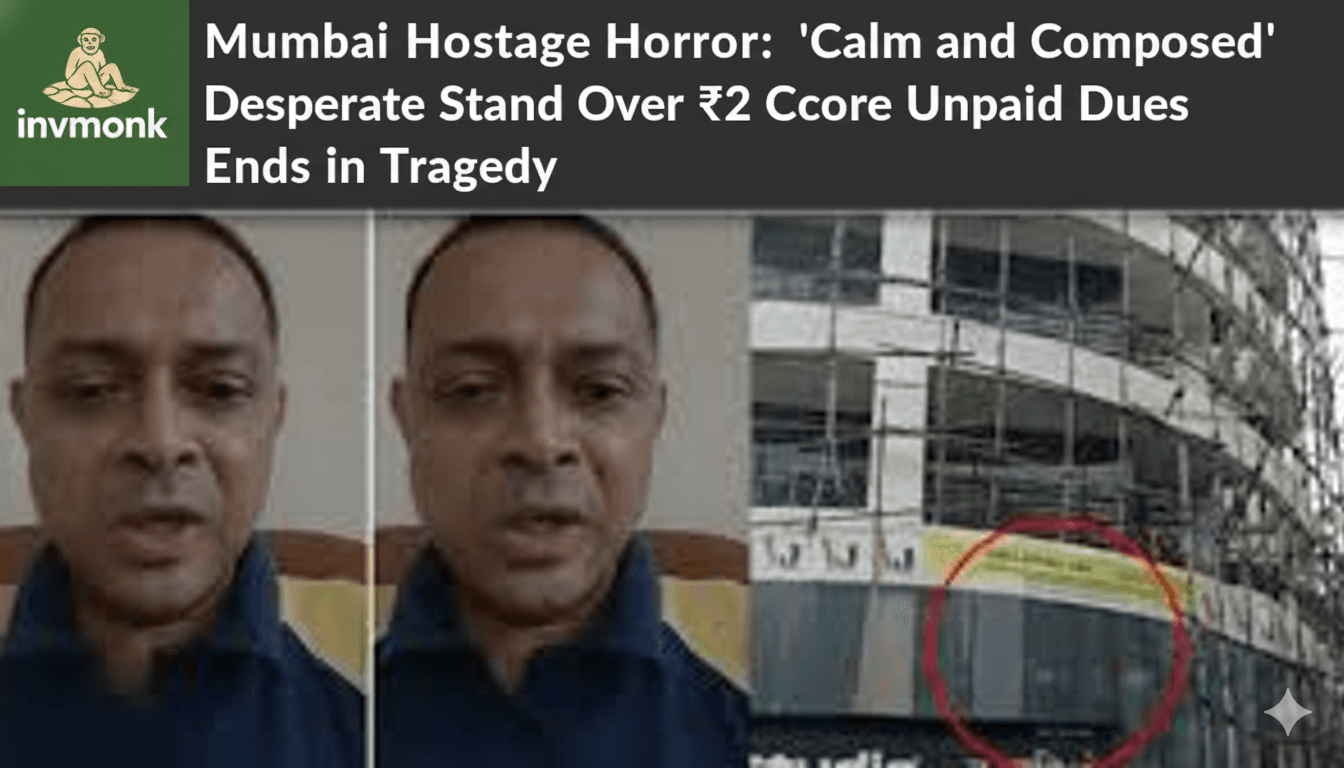
In a heart-wrenching turn that has stunned Mumbai, 50-year-old Rohit Arya barricaded himself inside a Powai studio with 17 children as hostages, only to be fatally shot by police after a tense 3.5-hour standoff on October 30, 2025. What began as an apparent audition call at RA Studio in the Mahavir Classic building spiraled into a desperate cry for justice over alleged unpaid dues from a government cleanliness project. While Anjali Arya, Rohit’s wife, attributes his actions to financial desperation, neighbors and acquaintances in Pune and Mumbai remember him as a “calm and composed” family man—leaving a community grappling with shock, grief, and questions about systemic failures.
If you’re searching for Rohit Arya Mumbai hostage incident details or insights into the Powai standoff 2025, this post unpacks the timeline, personal tributes, the ₹2 crore dispute, and the ripple effects on mental health and government accountability. A stark reminder of how unpaid dues can push individuals to the brink.
The Powai Standoff: A Desperate Act Unfolds
The ordeal kicked off around noon on Thursday when Rohit Arya, armed with an air gun and inflammable spray, locked down RA Studio—a space he reportedly used for creative projects. He had lured 17 children, aged 8-14, under the guise of auditions, barricading doors and issuing demands via video.
- Negotiation Timeline: TimeKey Events~12:00 PMChildren arrive for ‘audition’; Arya seals the studio.~1:00 PMPolice cordon off Mahavir Classic; negotiations begin.~2:30 PMArya releases video demanding attention to unpaid dues; no harm to hostages.~3:30 PMPartial releases; tension peaks as police prepare entry.~3:30 PMPolice storm in, rescue all 17 children unharmed; Arya shot, dies en route to hospital.
In his video plea, Arya insisted, “My demands are simple and moral and ethical. I am not a terrorist and do not have any monetary demands, and my demands are not immoral at all.” Mumbai Police confirmed all children were safe, crediting swift action and dialogue. The incident, unfolding in bustling Powai, evoked comparisons to past high-profile standoffs, amplifying calls for better crisis intervention.
For those tracking Mumbai police hostage rescue 2025, this case highlights the razor-thin line between desperation and danger.
‘He Was Calm and Composed’: Tributes from a Shattered Circle
Hours after the shooting, Anjali Arya rushed to the scene, her voice breaking as she pieced together her husband’s unraveling. “He was heading the PLC Swachhta Monitor project. Kesarkar saheb had appreciated it and said the government would sanction ₹2 crore for implementation. The work was completed, but Rohit never received the payment, not even formal recognition,” she told reporters. Driven to despair, Rohit—once a doting husband and cafe owner—saw his dreams crumble under financial strain.
Echoing her grief were voices from Pune, where Rohit ran Jelly’s Cafe until its closure months ago. Neighbors and shopkeepers painted a portrait of normalcy shattered:
- A local shopkeeper: “I was not aware of the news. I am completely shocked. We had normal ‘hi-bye’ interactions when he would come and go.”
- Another: “He once mentioned travelling to Mumbai to participate in a protest, though he was unaware of what it was about.”
- A former resident: “He was a normal person. He used to talk, just like you and I are talking. I did not have much interaction with him.”
- Yet another: “He was a calm and composed man… soft-spoken. I never thought something like this would happen. I have doubts about the version that has come out in the public.”
These recollections, reported by The Indian Express, humanize Rohit—a man who relocated from Pune a year or two ago, chasing opportunities in Mumbai’s creative scene. His cafe’s shuttering and mounting debts painted a man cornered, far from the “composed” figure etched in memory.
In the wake of Rohit Arya wife Anjali statement, these stories fuel debates on how financial woes erode mental resilience.
The ₹2 Crore Shadow: A Government Project Gone Awry
At the standoff’s core: A disputed ₹2 crore payout for the PLC Swachhta Monitor project, adopted in 2022 under Maharashtra’s Majhi Shala, Sundar Shala initiative. As Project Director, Rohit spearheaded cleanliness awareness in schools, earning praise from then-Education Minister Deepak Kesarkar.
But recognition didn’t translate to remuneration. Anjali claims the pilot was completed sans funding or acknowledgment, pushing Rohit to protest outside Kesarkar’s residence and Azad Maidan from July to October 2024. A police officer confirmed these demonstrations, noting Rohit’s growing frustration.
Kesarkar countered: “During my tenure, I had asked him to conduct a pilot… Last year, I even gave him some money personally after he complained that the education department was withholding his payment.” He denied official dues, calling the claims unfounded.
This clash spotlights systemic gaps in Maharashtra government project payments 2025—freelancers and contractors often languish in bureaucratic limbo, with delays fueling despair. Rohit’s video plea underscores a universal cry: Visibility over violence.
Broader Ripples: Mental Health, Protests, and Police Response
Rohit’s story isn’t isolated. His Pune protests mirror a rising tide of contractor agitations across India, where unpaid bills spark everything from dharnas to darker acts. Neighbors’ “doubts about the public version” hint at skepticism over police escalation—did dialogue exhaust before force?
Mumbai Police’s handling drew mixed reviews: Praised for zero child casualties, yet questioned for the fatal outcome. As investigations probe Arya’s motives and armament, experts urge mental health check-ins for at-risk professionals.
In unpaid dues India contractor crisis, cases like this amplify calls for faster disbursals and grievance portals. For families like the Aryas, it’s a void no amount of hindsight fills.
A Community in Mourning: Lessons from the RA Studio Tragedy
Rohit Arya’s death leaves 17 families relieved yet rattled, a wife widowed by desperation, and a neighborhood questioning the unseen fractures in everyday lives. “Calm and composed” no more, his legacy begs reflection: How many more Rohits teeter on the edge before systems intervene?
What do you think—could streamlined payments have averted this Powai hostage crisis 2025? Share your thoughts below, and subscribe for updates on Mumbai news incidents, mental health advocacy, and government accountability stories. In the face of tragedy, awareness is our first step toward prevention.