
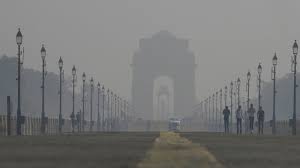
🔴 Delhi Chokes Again as AQI Crosses 300
After a short spell of minor improvement, Delhi’s air quality has again slipped into the ‘very poor’ category, with the Air Quality Index (AQI) touching 311 on Thursday evening. Just a day earlier, the AQI was 202 (poor category), but a fresh spike in pollutants has pushed Delhi back into hazardous levels.
PM2.5 continues to be the dominant pollutant, posing serious health risks, especially for children, elderly people, and those with respiratory conditions.
📉 AQI Comparison: Delhi vs NCR
| City | AQI Level | Category |
|---|---|---|
| Delhi | 311 | Very Poor |
| Gurugram | 269 | Poor |
| Noida | 257 | Poor |
| Greater Noida | 228 | Poor |
| Ghaziabad | 266 | Poor |
| Faridabad | 218 | Poor |
As per recent estimates by AQI.in, breathing Delhi air today is equivalent to smoking 9.2 cigarettes, while Gurugram is as bad as smoking 9.8 cigarettes a day.
🌫️ Why Did AQI Rise Again? Key Reasons
✅ Drop in wind speed
✅ Rise in PM2.5 from vehicular & industrial emissions
✅ Stubble (parali) burning in Punjab, Haryana
✅ Low atmospheric ventilation & winter inversion
✅ Construction dust, firecrackers, biomass burning in some regions
Meteorological experts say winds may slightly increase up to 15 kmph today afternoon, but will drop below 10 kmph again at night – further trapping pollutants near the surface.
⏳ No Respite for 6 Days, Says Forecast
According to the Centre’s air quality monitoring agencies, the air in Delhi will remain in the “very poor” category for the next 5–6 days.
Some areas may even slip into the ‘severe’ range (401–500 AQI) if weather conditions worsen.
🫁 Health Impact of ‘Very Poor’ AQI
AQI 301–400 is classified as “very poor”, which can:
- Trigger asthma attacks
- Cause throat and eye irritation
- Lead to persistent coughing and sneezing
- Reduce lung function with long exposure
- Impact heart patients and senior citizens
- Increase risk of respiratory infections in children
Long-term exposure to PM2.5 can even lead to chronic lung disease, heart complications, and reduced immunity.
🛑 Government Measures Likely Ahead
Under the GRAP (Graded Response Action Plan), the following may be implemented if AQI continues to rise:
- Ban on diesel generators
- Closure of stone crushers & polluting industries
- Restrictions on construction activity
- Odd-even vehicle rule (if severe)
- Temporary closure of schools
- Increased fines for open burning & dust violation
✅ What Can Citizens Do? (Safety Tips)
✔ Wear N95 or N99 mask when outdoors
✔ Use indoor air purifiers if possible
✔ Avoid early morning & late evening outdoor workouts
✔ Include lung-cleansing foods like tulsi, ginger, jaggery, citrus fruits
✔ Keep house plants like peace lily, aloe vera, snake plant
✔ Stay hydrated to reduce PM absorption in lungs
✔ Track real-time AQI apps before stepping out
❓ FAQs on Delhi Air Pollution
Q1. What does “very poor” AQI mean?
It means the air quality is harmful and can cause respiratory illness with prolonged exposure.
Q2. What is PM2.5 and why is it dangerous?
PM2.5 are ultra-fine particles that enter deep into the lungs and bloodstream, causing heart and lung issues.
Q3. Is pollution only a winter problem in Delhi?
It gets worse in winter due to slow winds, low temperature, and crop residue burning, but pollution exists year-round.
Q4. Can air purifiers really help?
Yes, especially indoors in rooms where seniors, infants, or asthma patients live.
📝 Conclusion
Delhi’s worsening AQI is not just a seasonal headline — it is now a public health emergency. With forecasts warning of no immediate improvement, it is crucial for both the government and citizens to adopt urgent, long-term solutions instead of temporary reactionary steps.
The smog may fade, but its impact on lungs and life expectancy won’t — unless strong, sustained action is taken.