
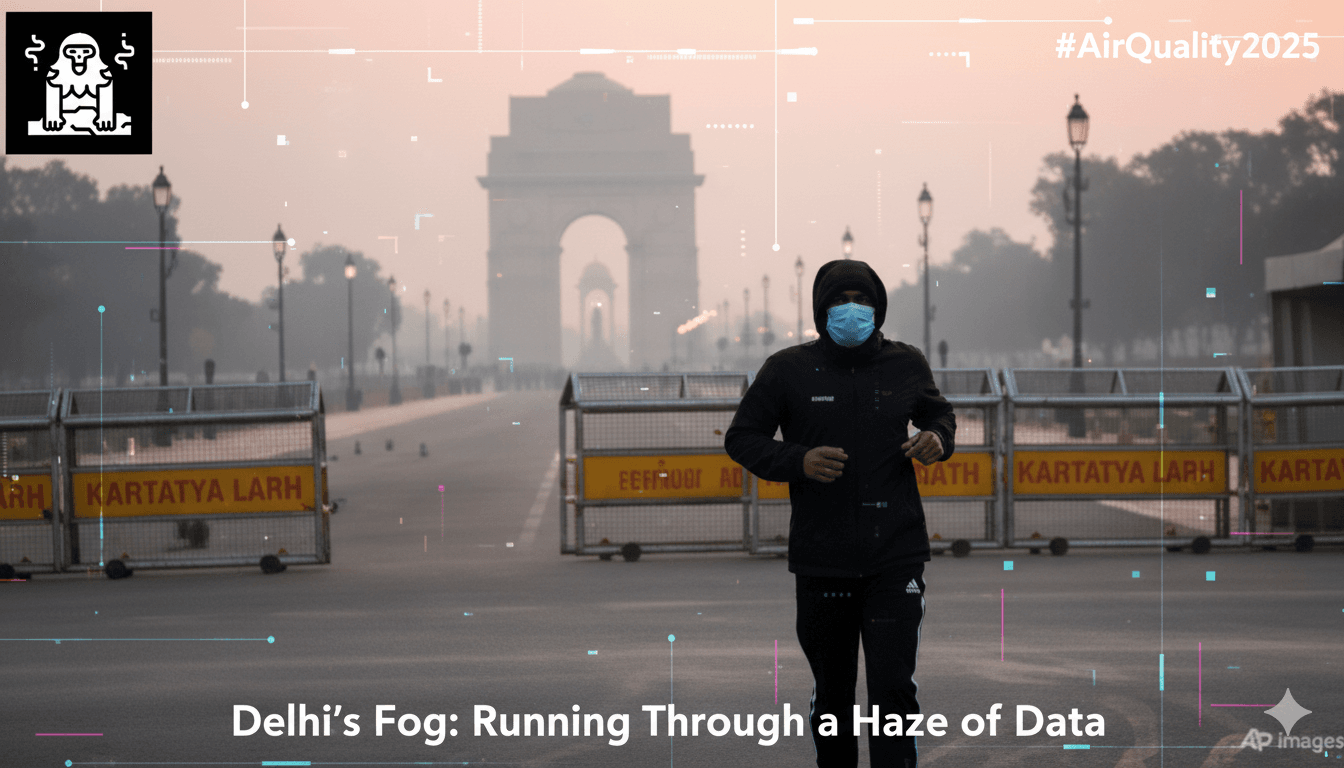
Picture this: The majestic Red Fort, once echoing with the cheers of Mughal processions, now shrouded in a suffocating veil so thick you can taste it. Or the bustling Chandni Chowk, where spice aromas mingle with invisible toxins that claw at your throat. Delhi, the pulsating core of India, isn’t just polluted—it’s perilously close to uninhabitable. As winter’s chill descends in November 2025, the city’s Air Quality Index (AQI) has rocketed past 300, plunging into “very poor” territory and equivalent to puffing nearly 10 cigarettes a day just by stepping outside. This isn’t hyperbole; it’s the grim reality unpacked in a compelling new video from StudyIQ IAS, which frames Delhi’s smog siege as a man-made apocalypse demanding immediate action.
In this deep dive, inspired by that eye-opening exposé, we dissect how the capital transformed from a symbol of power to a public health peril. From stubble fires to stalled winds, we’ll explore the culprits, the casualties, and the controversial cures. If you’re a Delhiite dodging diesel fumes, a visitor second-guessing your itinerary, or simply someone who cares about urban survival in a warming world, buckle up. This haze isn’t just smoke—it’s a siren for systemic change. Let’s clear the air, one fact at a time.
From Imperial Splendor to Smog-Shrouded Streets: Delhi’s Fall from Grace
Delhi’s story is one of epic highs and hazardous lows. Centuries ago, it was the throne of empires—Shah Jahan’s dream in white marble, the British Raj’s nerve center, and post-Independence India’s ambitious hub. Slogans like “Chalo Dilli” once summoned dreamers from every corner, promising opportunity amid the Yamuna’s flow. Fast-forward to 2025, and that same river runs black, while the air feels like a weighted blanket laced with poison.
The video’s narrator paints a poignant pivot: Over the last decade, pollution has normalized into a “new normal,” turning the city into a “toxic gas chamber.” Leading pulmonologists, like the Chairman of PSRI Institute, now advise the affluent to flee for weeks or months—echoing ancient kings who wintered elsewhere, but for far grimmer reasons. Why? Because Delhi’s air routinely shatters WHO limits, with PM2.5 levels 10-15 times the safe threshold. It’s not just stats; it’s a sensory assault—eyes stinging, coughs constant, and a pervasive dread that lingers like the fog.
This isn’t a one-off; it’s seasonal savagery. Every November, as Diwali crackers fade and farm fields ignite, the AQI spikes, grounding flights and shuttering schools. In 2025, with AQI breaching 311 on November 6, the capital’s 33 million souls (including NCR) are inhaling what feels like industrial exhaust. The video’s stark visuals—air purifiers gasping for clean filters—hammer home the horror: “Even machines need machines to breathe here.” For urban Indians, it’s a daily gamble: Commute through the chaos or cocoon indoors?
The Alarming Numbers: Delhi’s Place in the Global Pollution Hall of Shame
Let’s quantify the chokehold. Delhi doesn’t just flirt with danger—it dives in headfirst. The video spotlights how the city clings to the top 10 most polluted urban spots worldwide, with India locking down a similar slot among nations. On November 6, 2025, the AQI hit 311 (“very poor”), a sharp slide from the prior day’s 202 (“poor”). Break it down: PM2.5—the ultrafine particles that burrow into your bloodstream—dominates, clocking levels that make a day outdoors akin to chain-smoking 9-10 cigarettes.
CPCB’s color-coded crisis scale tells the tale:
- Good (0-50): A myth in monsoon months—rare as a clear skyline.
- Satisfactory (51-100): Minor twinges for asthmatics; fleeting summer relief.
- Moderate (101-200): Unease for lung or heart patients; the “tolerable” tease.
- Poor (201-300): Broad discomfort on extended exposure; 2025’s brief “breather.”
- Very Poor (301-400): Respiratory roulette for all; prolonged peril.
- Severe (401-500): Even the hale feel the hit; hospital hallways overflow.
NCR neighbors aren’t spared: Gurugram at 269 (poor, like 9.8 cigs/day), Noida 257, Ghaziabad 266—all teetering on the edge. The video cites studies: Delhi’s brew slashes life expectancy by 8 years, afflicting 40% of residents with chronic lung woes over lifetimes. Globally, it’s a badge of infamy—Beijing’s cleaned up, Lahore’s locked down, but Delhi drifts deeper into the smog.
These digits aren’t distant; they’re deadly. A 2025 Lancet report links India’s air apocalypse to 2 million premature deaths yearly—more than tobacco or booze. For Delhi’s dreamers, it’s a cruel irony: The city that lures with jobs now lunges with lethality.
Human Hubris Over Nature’s Whims: 90% of the Blame Is Ours
Geography gets a bad rap, but the video flips the script: “Nature’s no culprit—it’s our bowl of bad choices.” Delhi sits in the Indo-Gangetic plain, a topographic trap where the Himalayas block outflows, creating a natural “lid” on emissions. Yet, 90% of the poison poured in is human-sourced: Factories belching, vehicles vomiting, fields flaming.
Temperature inversions amplify the agony—winter’s cold layer seals pollutants like a Tupperware trap, starving dilution. Climate change tweaks the Western Disturbances, slashing rains that once rinsed the skies. Urban “canyons”—towering buildings stifling breezes—worsen the whirl. But blame-shifting to maps misses the mark: “Who dumps the toxins? Us.”
This man-made mayhem spares no season, but winter’s the witching hour. As winds whisper northwest at 10-15 kmph (per IMD Nov 6 forecast), they barely budge the brew—offering scant salvation through November 12. The video’s diagrams drive it home: A pollution dome descending, turning playgrounds into peril zones.
Stubble to Crackers: Unmasking Delhi’s Pollution Perpetrators
Pinpoint the poisoners, and a rogue’s gallery emerges. The video methodically unmasks them, starting with the seasonal scorcher: Stubble burning. Punjab and Haryana’s fields contribute 10-20% of Delhi’s winter woe, down 50% in 2025 thanks to subsidies for super-seeders. But smallholders balk at costs (₹2-3 lakh/acre), and the Punjab Preservation of Subsoil Water Act 2009—meant to save aquifers—squeezes sowing windows, tempting flames.
Winds whip the wrath: Pollutants from stubble, plus Pakistan’s dust devils, funnel south. Then, the urban underbelly:
- Waste Wrecks: Landfills like Bhalswa and Ghazipur smolder unchecked, spewing methane and particulates.
- Construction Chaos: Dust from unchecked digs blankets roads; 50% of Delhi’s sprawl is unplanned.
- Industrial Insanity: Outdated plants guzzle fossil fuels, ignoring cleaner swaps.
- Vehicle Vortex: Private cars explode (up 15% YoY), while metros strain at ₹50/trip—unaffordable for many.
- Diwali Detonations: Crackers spike AQI 200-300 points overnight, a festive fiasco.
The video’s montage—fiery fields to firework fallout—stings: “We celebrate with smoke, then choke on the cheers.”
Lungs Under Siege: The Human Cost of Breathing Delhi’s Brew
No metric matches the misery. The video’s visceral visuals—pristine mountain lungs vs. Delhi’s “black compound”-clogged counterparts—evoke horror. Inhale here, and you’re ingesting SO2, NO2, ozone, and PMs that inflame airways, trigger asthma, and turbocharge cancers.
Vulnerable vanguard: Kids’ developing lungs scar early; elders’ frail frames falter. Immediate hits—coughs, watery eyes—escalate to chronic COPD, strokes, and shortened spans. A 2025 AIIMS surge: Pollution-linked admissions jumped 25%, with ERs echoing wheezes.
The class chasm cuts crueler: Elites jet to Himalayas for “air cures”; migrants from Bihar huddle in haze for hustles. The video quotes experts: “We’re breathing our future away—one smoggy breath at a time.”
The Normalization Nightmare: Air Purifiers as Band-Aids, Not Blueprints
Delhi’s dirge has dulled senses: Smog’s “inevitable,” so we stockpile purifiers (₹700 crore market, 30% CAGR). Oxygen bars pop up like cafes; gyms seal like vaults. The video skewers this surrender: “We’ve marketed adaptation over annihilation—₹3.9 crore pollution budget vs. billions in bandaids.”
Governance gaps gape: GRAP stages (II active Nov 6) ban old diesels and curb construction, but enforcement evaporates. The rich relocate—Noida to Singapore—while the poor persist, swelling slums without swells in census.
This “resilience” ruse risks ruin: Civilizations crumble not from cataclysms, but complacency—like the Indus Valley, felled by forgotten floods.
Geographical Ghosts: Why Delhi’s Location Locks in the Lockdown
Nature’s not neutral, but it’s no nemesis. The video’s topo tales: Himalayan walls and Gangetic bowl corral contaminants, while urban density damps dispersal. Climate kinks—fewer rains, fiercer inversions—fuel the frenzy. IMD’s Nov 7 tease: Gusts to 15 kmph might nudge AQI to 250s, but it’s a drop in the dirty ocean.
Solutions? “Air shed” thinking: Treat Delhi-NCR as one lung, syncing stubble swaps and stack scrubbers across borders.
Pathways to Pure Air: 15 Steps, Beijing Blueprints, and Bold Bets
Hope hides in horizons. The video vaults Beijing’s 2013-2020 glow-up: 40% AQI slash via factory flights, EV mandates, and farm tech. Delhi’s 15-step blueprint (plus 21-point winter warplan) echoes: Subsidize seeders, electrify fleets, green grids.
Citizen calls: N95 masks (not cloth crutches), HEPA homes, herb gardens for O2. Track via apps; report via helplines. The mantra? “Dilution’s the cure—disperse, don’t deny.”
Yet, urgency underpins: “Delhi dies not from dirt, but our ‘normal’ nod.”
Clearing the Capital: A Collective Crusade Against the Choke
Delhi’s dilemma is India’s distress signal—a megacity mirroring our messy march. The video’s verdict? Preventable peril, if we pivot from palliatives to prevention. As AQI lingers “very poor” through mid-November, it’s time: Demand data-driven deeds, from farm funds to fossil fades.
For Delhi’s dwellers and dreamers, the haze heralds a hard truth: Clean air’s no luxury—it’s lifeline. Will we wheeze on, or wage war? The choice chokes in the air—breathe deep, act deeper.
What’s your anti-smog strategy—masks or mandates? Share in comments, and subscribe for Delhi pollution updates 2025, urban health hacks, and eco-action alerts. Let’s lift the lid on this toxic trap—together.